
11 August 2026 · Bharat Swasth Team
Ebola Outbreak 2026: Causes, Symptoms, Transmission & Can It Be Cured?
Learn about the Ebola Outbreak 2026, including its causes, symptoms, transmission, treatment, and whether Ebola virus disease can be cured.
A new Ebola outbreak has been spreading across the Democratic Republic of the Congo and Uganda since May 2026, and it's been declared a global public health emergency. While the outbreak is happening thousands of kilometers away from India, disease outbreaks like this one tend to raise a lot of questions closer to home too, especially with international travel and global health news being more connected than ever. This guide breaks down what caused the 2026 Ebola outbreak, what Ebola virus disease actually is, how it spreads, what the symptoms look like, and whether it can be cured.
What Is Ebola Virus Disease?
Ebola virus disease is a severe, often fatal illness caused by viruses belonging to the Filoviridae family. There are six known species of the virus, and four of them (Zaire, Sudan, Taï Forest, and Bundibugyo) are known to cause disease in humans.
The Zaire species is the one most people associate with Ebola, largely because it's the most deadly and the one responsible for the largest outbreaks in history, including the 2014 to 2016 West Africa epidemic. The 2026 outbreak, however, is caused by a different and rarer species called Bundibugyo virus, which matters more than it might seem, and we'll get into why a little further down.
A Brief History of Ebola
Ebola was first identified in 1976, following two outbreaks that occurred around the same time, one in Zaire (now the Democratic Republic of the Congo) and one in Sudan. The virus takes its name from the Ebola River, located near the site of the DRC outbreak.
Since then, outbreaks have occurred periodically, mostly in Central and West Africa. The 2014 to 2016 outbreak in Guinea, Sierra Leone, and Liberia remains the largest and most complex in history, with cases eventually spreading to a handful of other countries, including the United States. The Democratic Republic of the Congo has been the most frequently affected country overall, and the current 2026 outbreak is actually the 17th recorded Ebola outbreak in the DRC, arriving just five months after the previous one ended.
What Caused the 2026 Ebola Outbreak
The 2026 outbreak began in Ituri Province in northeastern DRC. Based on modeling and investigation, health officials believe the virus likely crossed over into humans sometime in January or February 2026, with mid to late February considered the most probable window.
Investigators traced a possible early cluster to a funeral held on February 4 in the town of Mongbwalu, for a pastor who had never been diagnosed with Ebola. During the funeral, the coffin was broken and the body was handled by family members, a practice that carries a well-documented risk of Ebola transmission. In the following weeks, nearly fifty people connected to the funeral, including several of the pastor's brothers, reportedly died with Ebola-like symptoms.
The outbreak was publicly confirmed in mid-May 2026, and the World Health Organization declared it a Public Health Emergency of International Concern on May 16 and 17. From Ituri, cases spread to North Kivu, Haut-Uélé, Tshopo, and South Kivu provinces, as well as to Uganda's capital, Kampala. Imported cases were also reported in Kinshasa and in France, and in July 2026, a US citizen working for a humanitarian organization in the DRC tested positive and was medically evacuated to Germany.
As of mid-July 2026, the DRC had reported over 2,300 confirmed cases and more than 900 related deaths, with several hundred patients still hospitalized in isolation. These numbers are changing quickly as the outbreak continues, so for the most current figures, the WHO and CDC outbreak pages are the most reliable sources to check.
Ebola Transmission: How Does It Spread
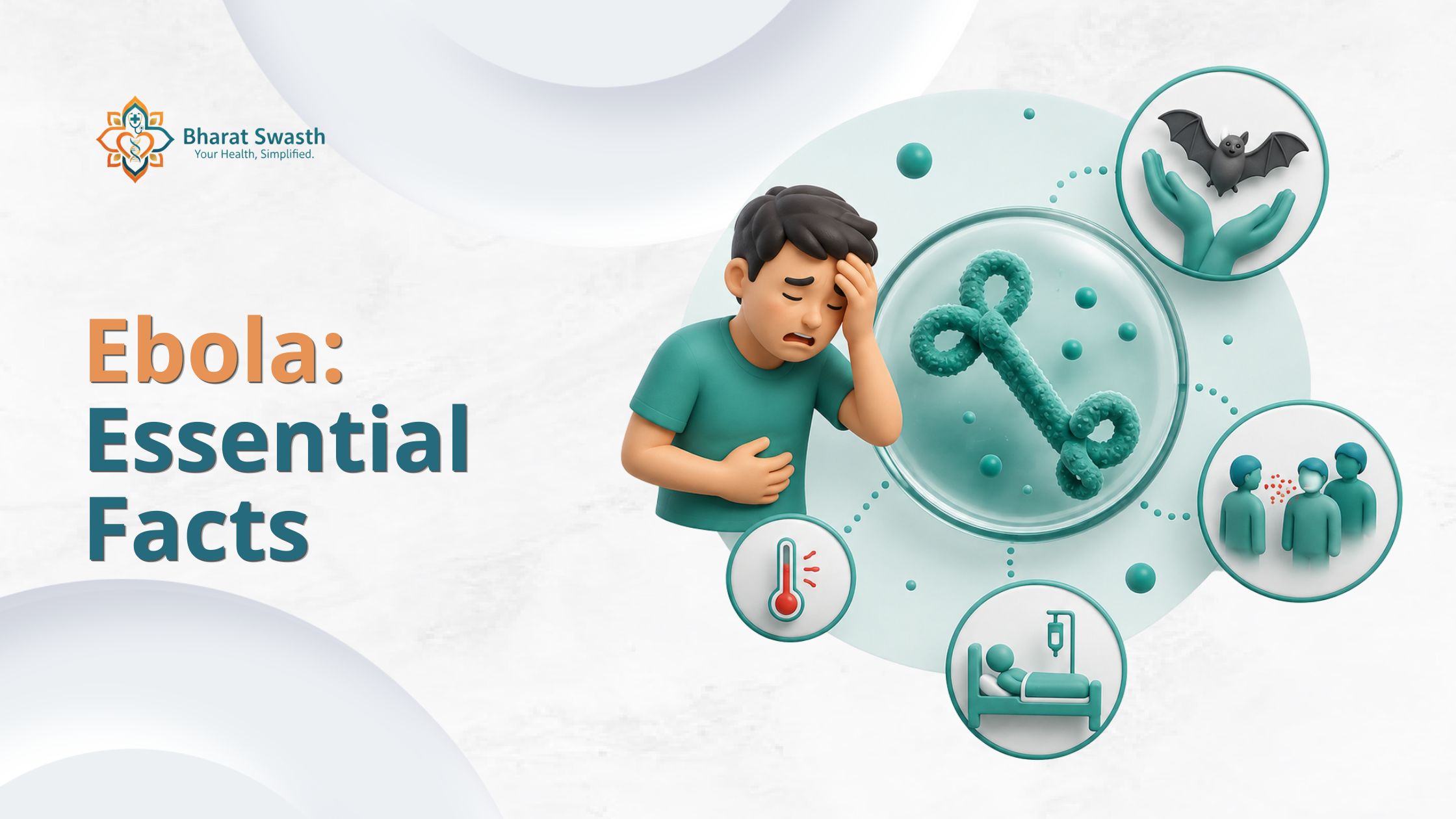
Ebola spreads through direct contact with the blood or bodily fluids of an infected person, including sweat, vomit, blood, and other secretions. It can also spread through contact with surfaces or materials, such as bedding or clothing, that have been contaminated with these fluids.
A few specific situations carry higher risk:
- Caring for a sick person without proper protective equipment
- Traditional funeral or burial practices that involve directly touching or washing the body of someone who died from Ebola
- Contact with infected animals, since the virus is believed to originate in wildlife, with fruit bats considered a likely natural reservoir, before spilling over into humans through contact with infected animals
Ebola is not spread through the air like a cold or flu virus. It also isn't spread through water or, in general, through food, aside from the well-documented risk from handling infected wild animals. This distinction matters, because a lot of public fear around Ebola outbreaks stems from the mistaken idea that it spreads as easily as an airborne illness.
Ebola Virus Symptoms
After exposure, Ebola has an incubation period of two to twenty one days, meaning symptoms can take anywhere from a few days to about three weeks to appear.
Early symptoms tend to be nonspecific, which makes initial diagnosis tricky. These usually include:
- Fever
- Chills and general weakness
- Muscle and joint pain
- Headache
As the illness progresses, more specific symptoms can develop, including nausea, vomiting, diarrhea, abdominal pain, chest pain, shortness of breath, and in more severe cases, confusion or bleeding. Not everyone develops hemorrhagic symptoms, but they're part of why Ebola has historically been associated with such high fatality rates when treatment is delayed.
Because early symptoms overlap with common illnesses like malaria or typhoid, especially in the regions most affected, anyone with a relevant travel history or known exposure who develops these symptoms should seek medical attention immediately rather than waiting to see if things improve. It is advised to get all required blood tests to be done as soon as possible.
How Is Ebola Diagnosed? What Tests Are Used
Diagnosing Ebola requires laboratory testing, since symptoms alone aren't enough to confirm it. Healthcare providers typically rely on:
- PCR blood testing, which detects genetic material from the virus and is the standard test used to confirm an active infection
- Antibody blood tests, which can show whether someone was infected in the past, even after symptoms have resolved
Anyone being tested for Ebola is kept in isolation at a healthcare facility until their blood reports come back, both to protect others and to allow close monitoring.
Can Ebola Virus Be Cured?
This is where the 2026 outbreak gets more complicated than past ones, and it's worth understanding clearly.
Supportive care is the foundation of Ebola treatment regardless of which species is involved. This includes fluids and electrolytes given orally or intravenously, medication to stabilize blood pressure, and treatment of any complications as they arise. Early supportive care significantly improves a patient's chances of survival.
Beyond supportive care, two targeted antibody treatments, Inmazeb and Ebanga, have been approved specifically for infections caused by the Zaire species of Ebola virus. A vaccine called Ervebo has also been approved for preventing Zaire-strain Ebola and has been used effectively in past outbreaks using a ring vaccination strategy, where contacts of confirmed cases and their contacts are vaccinated to contain spread.
Here's the catch with the current outbreak: none of these approved treatments or vaccines are approved for Bundibugyo virus, the species behind the 2026 outbreak. This is a meaningful gap, and it's part of why global health authorities have responded to this outbreak with such urgency. A clinical trial began in 2026 specifically to evaluate potential treatments for Bundibugyo virus disease, since no proven, targeted therapy currently exists for it.
Overall, Ebola's average fatality rate across all species and outbreaks is roughly 50 percent, though it has ranged from about 25 to 90 percent depending on the specific virus and the quality of care available. Early treatment, even without a targeted cure, makes a substantial difference in outcomes.
Is Ebola a Risk in India?
As of now, there have been no confirmed Ebola cases in India connected to this outbreak. The risk to the general Indian population remains very low, since the outbreak is geographically concentrated in Central Africa and spreads through direct contact rather than casual proximity.
That said, anyone traveling to or returning from the Democratic Republic of the Congo, Uganda, or nearby affected regions should stay aware of official travel advisories and seek medical attention promptly if they develop fever or related symptoms after travel. Standard hygiene practices, including handwashing and avoiding contact with anyone showing symptoms of illness, remain sensible precautions regardless of the current outbreak.
Getting Started
The 2026 Ebola outbreak is a serious, evolving public health event, but understanding how it actually spreads and who is genuinely at risk helps separate real precautions from unnecessary panic. Supportive care continues to save lives even without a targeted cure, and the ongoing clinical trial for Bundibugyo virus treatment is an important development to watch in the months ahead.
If you've had any recent blood work done and want a clear, plain-language explanation of your results while you wait to see your doctor, you can upload your report for a free analysis on Bharat Swasth's website or send it over on WhatsApp.
Disclaimer: This content is for educational purposes only and is not a substitute for professional medical advice. For the latest official updates on this outbreak, refer to the WHO and CDC websites. If you have symptoms or exposure concerns, consult a qualified doctor immediately.
Frequently asked questions
- What caused the 2026 Ebola outbreak?
- The outbreak began in Ituri Province, DRC, likely in January or February 2026, and is caused by Bundibugyo virus. Investigators traced early spread to a funeral where mourners had direct contact with an infected body, a known risk factor for Ebola transmission.
- What is Ebola virus disease?
- Ebola virus disease is a severe illness caused by viruses in the Filoviridae family. Four species, Zaire, Sudan, Taï Forest, and Bundibugyo, are known to cause disease in humans, with Zaire historically being the most deadly.
- How does Ebola spread?
- Ebola spreads through direct contact with the blood or bodily fluids of an infected person or contaminated surfaces, and through contact with infected animals. It is not spread through the air, water, or general food consumption.
- What are the symptoms of Ebola virus?
- Symptoms typically appear two to twenty one days after exposure and start with fever, chills, muscle pain, and headache, progressing to nausea, vomiting, diarrhea, and in some cases, bleeding or confusion.
- Can Ebola virus be cured?
- Supportive care improves survival for all Ebola species, and two approved treatments exist specifically for the Zaire species. However, no approved treatment currently exists for Bundibugyo virus, the species behind the 2026 outbreak, which is why a clinical trial is underway to find one.
- Is there a vaccine for Ebola?
- Yes, but only for the Zaire species. The Ervebo vaccine is approved and has been used effectively in past outbreaks. No vaccine is currently approved for Bundibugyo virus.